

Tremors and Movement Disorders
Tremors and movement disorders affect millions of people worldwide, impacting their ability to perform daily tasks. These conditions can range from mild and temporary to severe and chronic.
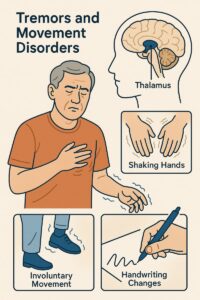
What Are Tremors and Movement Disorders?
Tremor: An involuntary, rhythmic shaking of a body part, usually the hands, arms, head, or legs.
Movement Disorders: A group of neurological conditions that cause abnormal voluntary or involuntary movements, including tremors, stiffness, or slowed movement.
Types of Tremors
Essential Tremor
The most common type, often affecting the hands, head, and voice.
Parkinsonian Tremor
Linked to Parkinson’s disease, typically appearing at rest.
Dystonic Tremor
Occurs in people with dystonia, involving abnormal muscle contractions.
Cerebellar Tremor
Caused by damage to the cerebellum, the brain’s movement control center.
Physiologic Tremor
A normal tremor that may become noticeable with stress, fatigue, or stimulants like caffeine.
Causes and Risk Factors
Movement disorders can result from various factors, including:
Genetic Mutations: Family history of neurological conditions.
Brain Damage: Due to stroke, injury, or infections.
Neurodegenerative Diseases: Like Parkinson’s or Huntington’s disease.
Medications: Certain drugs, such as antipsychotics or stimulants.
Toxins and Alcohol: Long-term alcohol use or toxin exposure.
Stress and Anxiety: May worsen tremors in some people.

Common Movement Disorders
Parkinson’s Disease
A progressive disorder causing tremors, stiffness, and slow movement.
Dystonia
Involuntary muscle contractions causing twisting or repetitive movements.
Huntington’s Disease
A genetic disorder causing uncontrolled movements and cognitive decline.
Tourette Syndrome
A condition involving motor and vocal tics.
Restless Legs Syndrome (RLS)
An uncontrollable urge to move the legs, usually at night.
Ataxia
Loss of coordination due to cerebellum damage.

Symptoms to Watch For
- Involuntary shaking or trembling
- Slow or rigid movements
- Difficulty with balance or coordination
- Muscle stiffness or cramping
- Uncontrolled facial movements or tics
- Speech and swallowing difficulties
If these symptoms persist or worsen, seek medical advice.
Diagnosis of Tremors and Movement Disorders
Doctors use various methods to diagnose these conditions, including:
Medical History and Physical Exam: Assessing symptoms and family history.
Neurological Tests: Checking motor skills, coordination, and reflexes.
Imaging Tests: MRI or CT scans to detect brain abnormalities.
Genetic Testing: For inherited movement disorders.
Living with Movement Disorders
While movement disorders can be challenging, many people manage their symptoms effectively with treatment, lifestyle adjustments, and support. Building a strong healthcare team, staying active, and maintaining a positive mindset can enhance overall well-being.